
⚡ In 30 seconds
- Stocktaking becomes a shared, parallel task.
- Snap a photo of the invoice and items are recognised.
- Purchase price tracking means less admin and better decisions.
If there is one area of restaurant operations that everyone considered a "necessary evil", it is inventory management.
Papers, spreadsheets, manual counting, disappearing stock, inaccurate inventory, stressful closings. Everyone knows it is important – yet everyone procrastinates.
Not because they do not care. But because until now, it was too complicated to do well.
We believe this is about to change.
The question was not whether to digitalize. But whether it would be meaningful
In recent years, many systems tried to "solve" inventory management. Most did the same thing: they digitalized the problem.
- Interface instead of Excel
- App instead of paper
- Instead of manual counting… still manual counting
The result? Slightly prettier, but still time-consuming and error-prone. We started from a different place.
What if we did not just record the data – but also interpreted it?
This is where AI comes in – but not the way you think
AI is a buzzword today. Every system is "smart", "automated", "intelligent". In reality, what matters in restaurant operations is:
- is the work faster
- do you make fewer mistakes
- do you spend less time on admin
If not, then it does not matter what technology is behind it.
That is why Onemin's new inventory system is not "AI-powered" because it sounds good. But because it solves concrete, daily problems.
For example: stocktaking is no longer a one-person job
Stocktaking is one of the most stressful tasks.
- someone counts
- someone writes
- someone checks
- and in the end it still does not add up
The new approach is simple:
Work on it together.
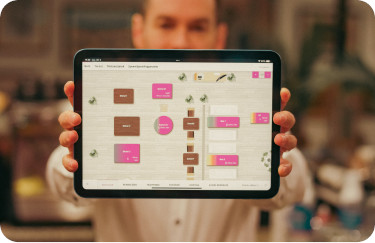
In a collaborative stocktaking app, multiple people enter data simultaneously. No waiting for each other, no process delays.
This is not futuristic. It is just finally logical.
Or: what if you did not have to weigh every gram?
In reality, you do not always measure precisely in the warehouse.
- "about half a canister"
- "maybe 2 kilos"
- "there is still a little left"
Until now, this meant errors in the system. Now, AI can estimate and correct.
You can build a good system from imperfect data – if it can interpret what it receives.
The biggest time thief in administration? Invoices.
Recording a supplier invoice: entering products, quantities, prices. That is easily 10–15 minutes. And it happens multiple times a day.
Now? One photo, and done.
In about 20 seconds, the system:
- recognizes the items
- reads the data
- records it in inventory
This is the point where the process did not get 10% better. It got orders of magnitude better.
And what was invisible until now: purchase price movements
Most restaurants do not know exactly how ingredient prices change. Yet this directly affects profit.
The new system does not just record prices – it tracks changes. So you do not find out after the fact that costs spiraled. You can react in time.
Important: you do not have to relearn everything
The biggest fear with any new system: "how long will it take to learn?" That is why the logic has not changed. The foundation remains the same. Only:
- it is faster
- it is simpler
- it takes fewer steps
This is what modern inventory management looks like
The goal is not to have more data. But to make better decisions with less work.
A well-functioning system:
- does not hinder, but helps
- does not increase administration, but reduces it
- does not complicate, but simplifies
And perhaps most importantly: you do not have to deal with it separately – it works in the background.
This is just the beginning
Inventory management is just the first step. The goal is a restaurant operating system where:
- AI also launches marketing campaigns
- most of the administration is automated
- the website is not built from templates
One question remains
If you started a restaurant today, would you manage inventory the same way as 10 years ago?
We think not.
And now you do not have to.
FAQ
Why is AI inventory better?
It interprets data, not just records it: faster work, fewer errors.
How does invoice scanning work?
Photograph the supplier invoice; items and prices are read automatically.