⚡ In 30 seconds
- Online reviews are digital word of mouth: people trust people, not brands.
- Videos showing guests get 6–10x more views.
- Top venues motivate reviews, e.g. with a free item.
Reviews are digital word of mouth. And the power of word of mouth hasn't decreased in the internet age — it has multiplied.
Here are some recent examples of the power of word of mouth.
The Simon's example: When Simon's opened in New York, long lines stood outside the door. Journalists asked people in line: why did you come? Many answered: they didn't know what it was, they just joined because of the line. The crowd itself was the marketing.
The Bumble trick: The dating app acquired users on university campuses by putting up a sign: "Not allowed: Facebook, Instagram, TikTok, Twitter, and Bumble." As if Bumble was at the same level. Then 15 minutes later they sent someone in wearing a Bumble shirt, and people got curious.
The power of guest content: Restaurant videos featuring the actual guest eating and reacting get 6-10 times more views than simple food showcases. Instead of 2-3 thousand views, videos with the customer in them got 18-20 thousand views.
The common denominator: people respond to other people's opinions, not brand messages. Restaurant review collection uses exactly this mechanism — for free.
How to motivate guests to leave reviews?
The most successful ones don't just ask for reviews: they motivate, for example like this:
Free item offer: If someone writes a review, they get a free item. This isn't new: all major franchises do it. Look at units with 3-5 thousand reviews — they regularly motivate guests.
"At Simon's, they make concrete offers: if someone reviews the restaurant, they get a free item. They take this marketing approach very seriously."
Motivation isn't expensive. A dessert, a soft drink, a discount coupon costs minimal but has a huge impact. People gladly write reviews when they feel they got something in return.
Dine-in vs. delivery: how to ask for reviews?
For delivery, reviews can be requested automatically: Once the order is out and the guest has presumably eaten (about 2 hours after ordering), they receive an email or SMS: "Were you satisfied? Review us!" This needs to be set up once, then it runs automatically in the Onemin system.
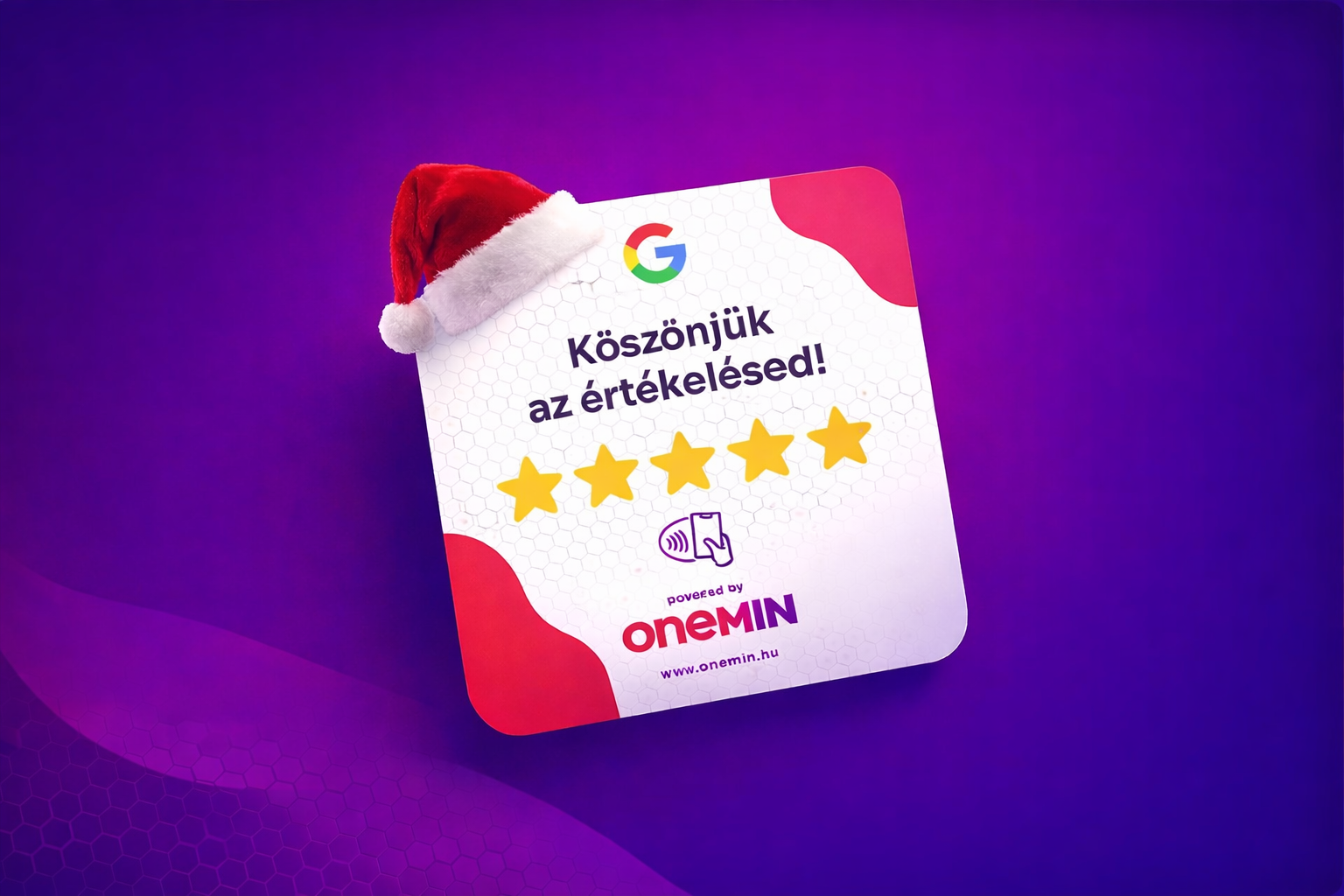
For dine-in guests, it's better to ask for reviews in person: an NFC card on the table or with the waiter is enough. A personal request is much stronger than an email, but it needs to be made systematic, not dependent on the waiter's mood.
The real breakthrough is when you automate these, and it's not a matter of mood but part of the system.
Frequently asked questions
- Isn't it awkward to ask guests for reviews? No. 99.9% of guests consider it natural when asked. All major brands do it — why wouldn't you?
- Won't I get more bad reviews if I ask for more reviews? No, quite the opposite. With the smart filter, you handle negatives directly before they become public. Only positives go to Google.
- How much does all this cost? Almost nothing. An automatic email, a little attention, and at most one free dessert per customer.
- What should I do if I actually get bad reviews? Improve your operations. Review collection isn't a PR trick — it's feedback on your restaurant's work. If 35 people report the same problem, that has serious informational value, and the good news is: you know what needs to be fixed in your business operations.
Want to listen to our podcast on this topic?
Click to visit the Profitable Restaurant Podcast page
FAQ
Does word of mouth still work online?
Yes — reviews and shared videos multiply it.
Which videos work best?
Ones showing real guests eating and reacting.